




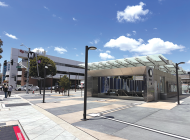
Large multi-family developments will be allowed in neighborhoods within a half mile of transit lines such as Hancock Park under the state law, which takes effect on July 1, 2026. (photo by Edwin Folven)
The Los Angeles City Council’s Planning and Land Use Management Committee heard a report on Nov. 17 from the Department of City Planning detailing next steps for addressing the impacts of Senate Bill 79, a state law that allows larger housing projects in neighborhoods within a half-mile of subway and light rail stations and major transit lines.
The council’s PLUM Committee approved a plan on Nov. 17 to further analyze all of the potential options. The maximum amount of time the city could delay effectuation of SB 79 is one to five years, depending on the type of mitigation plan that is implemented.
SB 79, which was authored by Sen. Scott Wiener (D-San Francisco) and signed into law in October, seeks to create more multi-family buildings in urban areas to address the state’s housing crisis. Multi-family buildings five to nine stories tall could be constructed by-right in neighborhoods near transit lines if they contain units designated as affordable housing. The bill was opposed by Los Angeles Mayor Karen Bass and the Los Angeles City Council because it overrides city zoning regulations, allowing larger projects in neighborhoods where they would otherwise be prohibited. SB 79 will take effect on July 1, 2026.
The city is seeking to mitigate potential impacts of SB 79 in single-family neighborhoods and historic communities located along transit lines. Neighborhoods such as Windsor Square, Hancock Park and the Miracle Mile could be impacted due to their proximity to Metro’s D Line subway system along Wilshire Boulevard. Neighborhoods along La Brea Avenue may also be affected because of bus-only lanes on the street.
SB 79 allows cities to determine how they will implement the new law, allowing some options for exemptions in sensitive areas such as high fire severity zones and historic districts, and allowing cities to take certain steps to delay effectuation such as up-zoning communities to allow more housing density or creating an alternative plan to create more housing around transit stations.
The committee members present at the meeting – Councilmembers Bob Blumenfield, 3rd District; Nithya Raman, 4th District; and Heather Hutt, 10th District; said they support an option that will delay effectuation of the state law until the city can find ways to mitigate impacts on neighborhoods. The council members also said they want an opportunity to vet the options with constituents before making any final decision. The city faces a tight deadline for implementing a plan to delay effectuation, as the council must act by the end of March to ensure there is enough time for the plan to be approved by the state prior to SB 79 going into effect. The PLUM Committee approved the Planning Department’s request for resources and technical support to fully analyze all of the options, and a Planning Department report with more specific details and recommendations for moving forward will come before the City Council in January.





0 Comment