




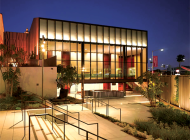
GPI Companies wants to build a four-story structure with three levels of subterranean parking on the site of the former Friars Club building. (rendering courtesy of GPI Companies)
On Feb. 4, a proposed mixed-use project on the site of the former Friars Club building was again before the Beverly Hills City Council, where it received partial approval. The item will come back before the council on Feb. 18.
Much of the project was approved on a series of 4-1 votes, with Mayor John Mirisch voting against it. However, once the project was approved, Mirisch joined his colleagues in supporting the development agreement the city reached with GPI Companies, which was approved unanimously.
Some of the required votes, however, were delayed until Feb. 18 –the time when some of the ordinances will receive their required second reading – because of one sticking point: noisy construction early in the morning.
In 2018, the Belvedere Hotel Group, which owns the Peninsula Beverly Hills hotel, appealed the project’s approval, and the Peninsula’s representatives again made their case on Feb. 4 that loud noises in the morning would be disruptive to their business, which is across Charleville Boulevard from the project site at 9908 S. Santa Monica Blvd.
“Noise is a big concern for the Peninsula, particularly early in the morning. As you know, guests come to the Peninsula hotel for tranquility, for quiet, for peace. Starting noisy work at 8 a.m. is of great concern,” said Offer Nissenbaum, managing director of the hotel.
Nissenbaum and Michael Tenner, the hotel’s general counsel, suggested that noisy construction – such as jackhammering, drilling and heavy hauling – could begin at 9:30 a.m. and, in exchange, work could continue later into the evening.
Cliff Goldstein, founder and managing partner of GPI, argued that not only would starting each day at a later time be expensive for the developers, but the cumulative effect of the delays could add up to eight months of additional construction time for a project that’s already expected to take two years. In addition, Goldstein said, working later into the day comes with problems of its own.
“If you delay it, you’re going to delay it right into rush hour. You’re going to make it worse for everybody,” Goldstein said.
Eventually, during a break in the meeting, the two sides seemed to come to an agreement that would have the construction crews do as much as they could to limit noisy construction before 9 a.m. – including the use of sound barriers and blankets, and performing early-morning noisy activities on the west side of the property, farthest from the Peninsula – and any exceptions will have to be approved by the city. Hotel management would be advised in writing of any approved exceptions at least 24 hours in advance of the early-morning work beginning.
In exchange, the hotel would waive its right to sue to try to slow down or stop the project under the California Environmental Quality Act. If a CEQA lawsuit is filed, the project will only be subject to the city’s time limits on noisy construction work, which can begin as early as 8 a.m.
Though the concessions from GPI seemed to potentially be satisfactory to the hotel, Tenner said he needed to let the Peninsula’s owners and partners see the proposed stipulations before agreeing to anything binding.
“We’re not asking for an extensive period of time to review this, but we do think it’s equitable to let the folks that own the hotel weigh in on the language that we crafted on the fly this evening,” Tenner said.
Tenner advised that the hotel will come to a decision on the proposal before the Feb. 18 meeting.
Additionally, as a result of the city’s December urgency ordinance that reduced the amount of spaces required of restaurants, the project will have 54 parking spaces available to the public at the city facility rate, instead of the 41 that were previously set aside for public use.








0 Comment