




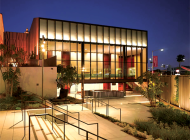
Expanded use of technology, coordinating with Metro for the Purple Line Extension project, evaluating rent stabilization policy and enhancements along Little Santa Monica Boulevard will be among the Beverly Hills City Council’s priorities for the upcoming year.

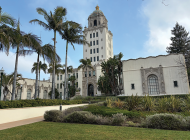
The restoration of Beverly Gardens Park, including landscaping and design work, is one of the city’s priorities for the year. (photo courtesy of the city of Beverly Hills)
And to help inform residents about the progress in those areas, the city’s website will be upgraded as part of a list of more than 40 priorities the council reviewed at its April 24 study session.
“The website is long overdue for an overhaul to be user-friendly, to be searchable and navigable,” Vice Mayor John Mirisch said.
The City Council will oversee Metro construction activity and coordinate outreach, marketing and planning for the area around the site of the Wilshire/Rodeo station. Local officials, including Beverly Hills Councilwoman Lili Bosse, Los Angeles Mayor Eric Garcetti and Los Angeles City Attorney Mike Feuer participated in a groundbreaking ceremony in February for Phase 2 of the Purple Line project, which will run through Beverly Hills to Century City. The $2.53 billion segment is expected to be completed in 2025.
The Santa Monica Boulevard Reconstruction project will be removed from the city’s list of priorities with its completion nearing. The project, extending from Doheny Drive to Wilshire Boulevard, will include new bike lanes, an upgraded storm drain system and new LED street lights, among other improvements.
“Do you want to have hashtag mission accomplished?” Mirisch quipped.
The city is also working to replace parking spaces that were removed on South Santa Monica Boulevard to better accommodate traffic as the reconstruction project continued. But businesses reported losses in revenue and concerns that speeding cars caused for other drivers and pedestrians.
With statewide elections coming up in June, the City Council also agreed on what positions to take on behalf of the city regarding four pieces of proposed state legislation.
The city will not take a position on Proposition 68, which would provide funding for state and local parks, water infrastructure and flood protection projects, and other environmental projects through $4 billion in general obligation bonds. City staff provided a recommendation for the city to oppose the proposition with concerns over the 3.5 percent interest rate. But council members, indicating support for the projects that would receive the funds, wanted to remain neutral.
The council decided to support Proposition 69, which would require that all revenue from the diesel sales tax and Transportation Improvement Fee created by Senate Bill 1 is used for transportation-related purposes. Council members also decided to support a ballot measure that would repeal SB 1. Funds raised with SB 1 are intended for maintenance along state highways and local streets.
“We feel there were other ways to get that funding,” said Mirisch, a frequent critic of state government. “ … The way Sacramento funds things is often fundamentally flawed and unfair.”
Gov. Jerry Brown pushed for the passage of SB 1 last year, and the bill passed a partisan vote, with one republican lawmaker voting “yes.”
Lastly, the council elected to oppose the Tax Fairness, Transparency and Accountability Act of 2018. The League of California Cities also opposed the act, saying it would reduce local revenue authority, including the requirement of a supermajority vote by local authority to enact a tax for general purposes.
Last week, the City Council went over its legislative priorities for the upcoming year. A state constitutional amendment to promote local decision-making is one of the priorities that the city will pursue long term.
The top five legislative priorities for the upcoming year listed on a staff report issued last week are local control, pension reform, fiscal and administrative initiatives, electoral process and public safety. Other priorities include emergency preparedness and homeland security, housing and land use, transportation, environmental sustainability, public health and community services.






0 Comment